


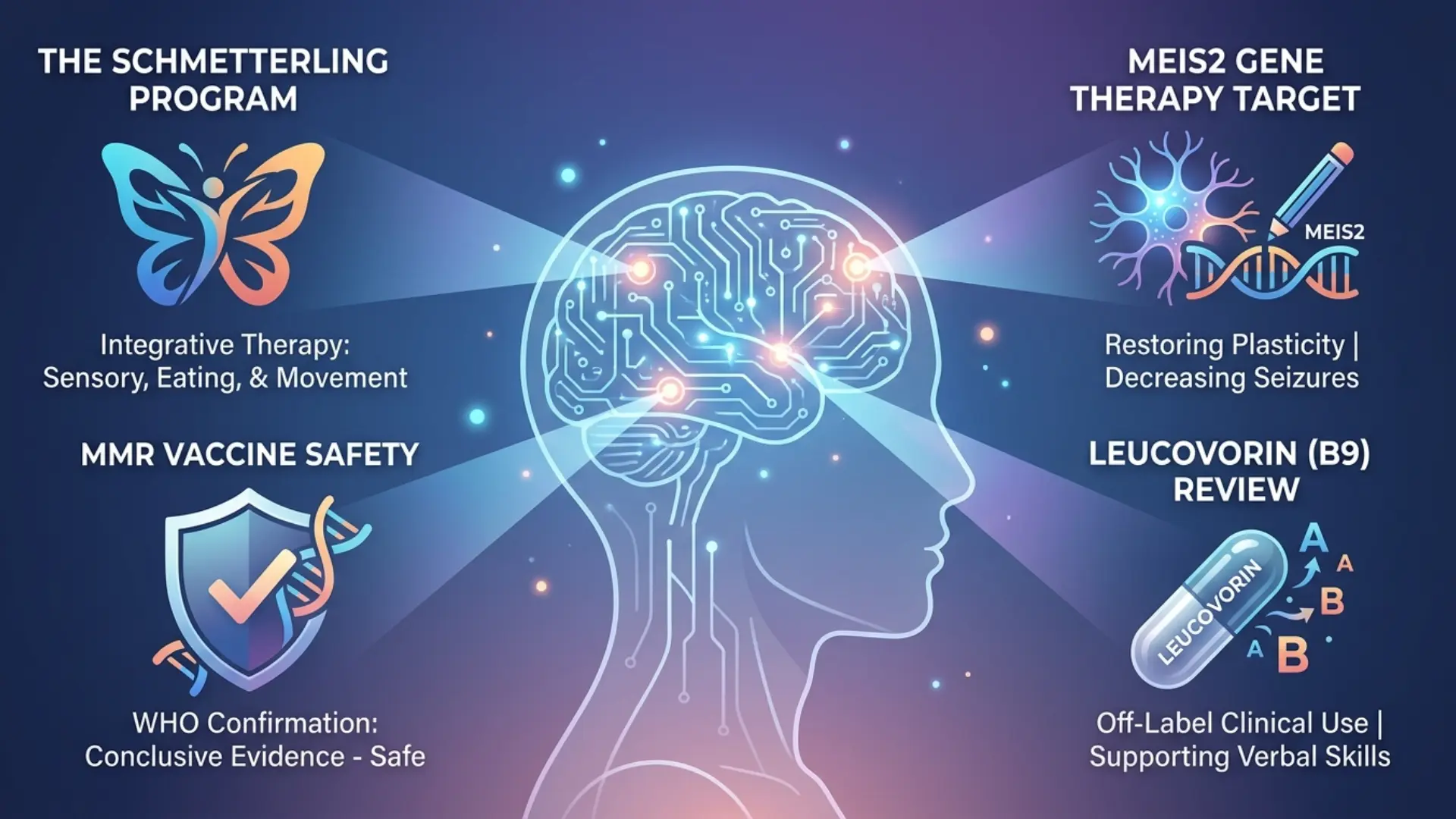
Research led by Mass General Brigham reveals that overexpressing the Meis2 gene restores brain plasticity and decreases seizures in neurodevelopmental disorder models.
A breakthrough study led by researchers at Mass General Brigham points toward a promising new avenue for treating conditions like autism spectrum disorder (ASD) and epilepsy. Scientists discovered that targeting a single gene – Meis2 – can restore compromised brain plasticity and lower seizure frequency in preclinical models of neurodevelopmental disorders (NDDs).
The findings, published in Nature, focused on “experience-dependent plasticity”- the brain’s ability to adapt and modify neuronal connections in response to new experiences. Disruptions in this adaptive process are widely believed to trigger key cognitive and neurological symptoms seen in NDDs.
Uncovering a Crucial Regulator of Brain Plasticity
To understand how these cellular adaptations fail, the research team analyzed genes controlling parvalbumin inhibitory neurons – specialized brain cells responsible for regulating overall neural activity.
Among these, the Meis2 gene stood out. While typically present at low levels within parvalbumin neurons, Meis2 activity spiked when exposed to environmental stimuli. This suggested that the gene plays a crucial role in enabling experience-based learning and adaptation.
Led by co-first authors Dr. Yu-Tzu Shih and Dr. Jason Alipio, the team tested whether boosting Meis2 levels could reverse existing cellular damage.
“Cognitive impairment and seizures are hallmarks of neurodevelopmental disorders and represent a large, unmet clinical need,” stated senior author Dr. Amar Sahay, a researcher in the Department of Psychiatry at Mass General Brigham and associate member at the Broad Institute of MIT and Harvard. “We show in proof-of-concept studies that targeting one candidate gene could be sufficient to reverse developmental deficits, even in adulthood.”
Gene Therapy Reverses Cognitive Deficits and Reduces Seizures
Using gene therapy techniques to increase Meis2 production within parvalbumin neurons, researchers evaluated the strategy in mouse models displaying classic NDD traits.
The results were significant:
- Neural Rebalancing: The therapy restored the critical balance between excitatory and inhibitory signals in the brain.
- Memory & Plasticity Boost: Treated mice demonstrated notable gains in both social and spatial memory alongside restored experience-dependent plasticity.
- Seizure Suppression: The intervention visibly reduced seizure frequency while correcting abnormal brain wave patterns tied to cognitive processing.
These outcomes demonstrate that restoring neural adaptability might reverse long-standing developmental challenges, even after symptom onset.
Translating Preclinical Success to Human Health
While the preclinical results offer hope for future gene therapies, experts emphasize that significant work remains before clinical trials in humans can begin.
“The development of new therapeutics for NDDs is dependent on understanding the mechanisms by which risk genes cause impairments,” explained Dr. Sahay. “The path from mechanism to therapy is a long and arduous one, but starting with a deep insight into mechanism is crucial to increasing the likelihood of success.”

