


Understanding the Daily Transition Struggle
If you’re a parent, you probably know this scene by heart. The morning rush where every minute feels like a race against the clock. The nightly struggle where bedtime turns into endless negotiations. Or that heart-sinking moment at the park when it’s time to leave, and suddenly your child collapses into tears. These daily transitions can feel exhausting, repetitive, and emotionally draining.
Many parents quietly wonder, “Why is my child making this so hard?” After repeating reminders for the tenth time, it’s easy to feel like a nag or assume your child is being stubborn or defiant. But here’s the truth most parents aren’t told: for many children, transitions are genuinely difficult. Not because they don’t want to cooperate, but because their brains are still learning how to shift gears.
Children, especially younger ones, struggle with abstract concepts like time, sequencing, and “what comes next.” Add sensory sensitivities, emotional intensity, or executive functioning challenges into the mix, and transitions can feel overwhelming. Suddenly stopping a preferred activity without a clear warning can trigger anxiety, frustration, or even panic.
Understanding this changes everything. When we stop viewing resistance as bad behaviour and start seeing it as a skills gap, our parenting approach shifts. Instead of reacting with frustration, we can respond with tools that support our child’s brain. One of the most effective tools? A visual schedule.
What Is a Visual Schedule?
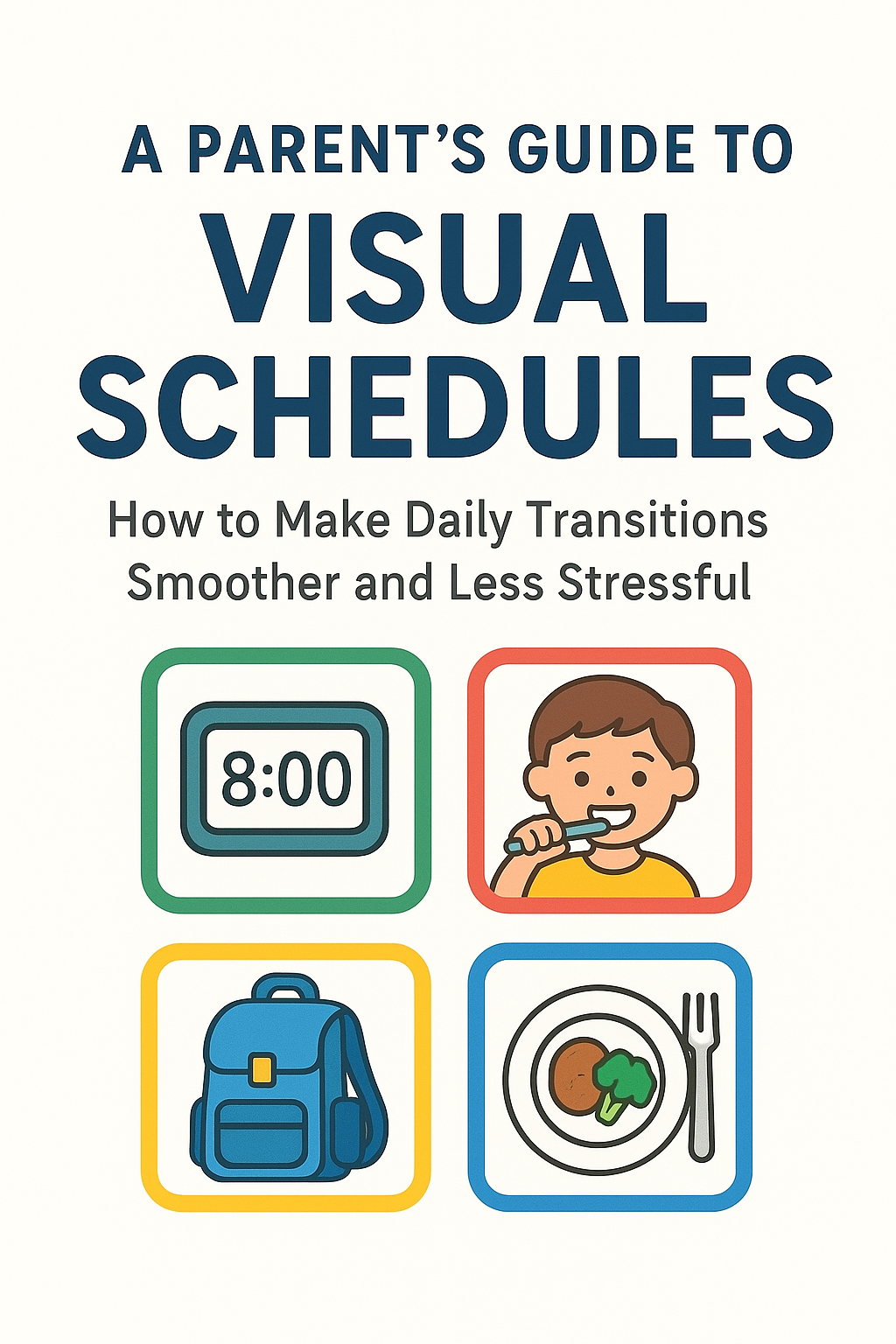
A visual schedule is exactly what it sounds like: a visual representation of activities or routines using pictures, symbols, or simple words. It shows a child what is happening now and what will happen next. Instead of relying solely on verbal instructions, the schedule gives children something they can see, touch, and refer back to whenever they feel unsure.
Think of it as a roadmap for the day. Just like adults check calendars, to-do lists, or phone reminders, children benefit from having their own visual guide. A visual schedule can cover a full day or just a specific routine, such as mornings, after school, or bedtime.
What makes visual schedules so powerful is that they externalise information. Instead of holding everything in their head, the child can rely on the schedule. This reduces cognitive load, lowers stress, and creates clarity. Over time, this simple tool can dramatically reduce power struggles and emotional outbursts.
The Brain Science Behind Visual Schedules
How Children Perceive Time Differently
Adults often forget that children don’t experience time the way we do. When you say, “Five more minutes,” your brain automatically understands what that means. A child’s brain, however, may hear something vague and confusing. Five minutes feels the same as thirty minutes when you’re four years old.
Children think concretely, not abstractly. Time, sequencing, and future events are abstract concepts that take years to develop. This is why transitions feel abrupt and unfair to them. A visual schedule turns time into something concrete. When a child sees a picture of what comes next, their brain can start preparing for the change.
Sensory Processing and Executive Functioning Challenges
For children with sensory sensitivities, ADHD, autism, or executive functioning difficulties, transitions can be even harder. Their brains may struggle with shifting attention, stopping one activity, and starting another. Unexpected changes can trigger sensory overload or emotional dysregulation.
Visual schedules support these children by offering predictability. Predictability creates safety. When the brain knows what to expect, it doesn’t need to stay on high alert. This reduces anxiety and allows the child to engage more calmly with their environment.
Why Visual Schedules Work So Well
Reducing Anxiety and Emotional Overload
One of the biggest benefits of visual schedules is anxiety reduction. Many meltdowns aren’t about misbehaviour; they’re about fear of the unknown. When children don’t know what’s coming next, their brains fill the gap with worry.
A visual schedule removes that uncertainty. The child can see the sequence of events laid out clearly. This allows them to mentally prepare for transitions instead of being caught off guard. Over time, this predictability builds emotional resilience.
Creating Predictability and Psychological Safety
Children thrive on routine. Predictable environments make them feel safe and secure. A visual schedule reinforces routine without constant verbal reminders. It becomes a quiet, consistent presence that reassures the child: “You’re safe. You know what’s next.”
Visual Schedules and Emotional Regulation
Emotional regulation is a skill that develops over time. Children aren’t born knowing how to manage disappointment, frustration, or impatience. Transitions often trigger big emotions because they involve stopping something enjoyable or facing something challenging.
Visual schedules support emotional regulation by reducing surprises. When a child knows what’s coming, their emotional response is less intense. They’re not suddenly yanked out of an activity; they’re guided gently toward the next step.
This proactive approach prevents meltdowns instead of reacting to them. Over time, children begin to internalise this sense of predictability, which strengthens their ability to self-regulate even without the schedule.
Building Independence Through Visual Schedules
One unexpected benefit parents notice is increased independence. When children rely less on verbal prompting, they start taking ownership of their routines. Instead of asking, “What do I do now?” they look at the schedule.
This shifts the dynamic in a powerful way. The schedule becomes the “boss,” not the parent. This reduces power struggles and preserves the parent-child relationship. Children feel more in control, and parents feel less like enforcers.
Independence builds confidence. Each time a child completes a step and moves it to “finished,” they experience success. These small wins add up, reinforcing positive behaviour and self-esteem.
How to Create a Visual Schedule Step by Step
Step 1: Start Small and Choose the Right Routine
The biggest mistake parents make is trying to schedule the entire day at once. Start with one challenging routine, such as mornings, after school, or bedtime. Focusing on a “pain point” increases the chances of success.
Step 2: Break Routines into Clear, Observable Steps
Keep steps simple and specific. Instead of “get ready,” break it down into actions your child can see and do. For example:
-
Wake up
-
Brush teeth
-
Change clothes
-
Eat breakfast
Clarity is key. If a step can’t be easily understood, it won’t be effective.
Step 3: Create Meaningful and Culturally Relevant Visuals
Real photos work best. Take pictures of your child’s actual shoes, study table, snack, or bed. In Indian homes, include familiar elements like washing hands and feet, having nashta, evening puja, or visiting grandparents. Familiar visuals increase engagement and understanding.
Step 4: Assemble the Schedule Board
Use chart paper, cardboard, or a whiteboard. Velcro icons work well because children can physically move tasks to a “finished” pocket. This tactile element reinforces accomplishment.
Step 5: Introduce and Stay Consistent
Introduce the schedule during a calm moment. Walk your child through it gently. Consistency is crucial. Everyone involved in caregiving should follow the schedule to avoid confusion.
Supporting Transitions with Visual Timers
Some transitions involve waiting, which can be especially hard for children. Pairing a visual schedule with a liquid motion timer can be incredibly effective. These timers make waiting visible. When the bubbles stop, the time is up. No arguments, no surprises.
This combination reduces anxiety and builds trust. Children learn that time limits are predictable and fair.
From Chaos to Calm with One Simple Tool
Visual schedules are more than charts on a wall. They’re tools that support brain development, emotional regulation, and independence. By making time visible and routines predictable, parents can reduce daily stress and empower their children to navigate transitions with confidence.
Small changes create big shifts. A simple visual schedule might just be the calm your family has been searching for.

