


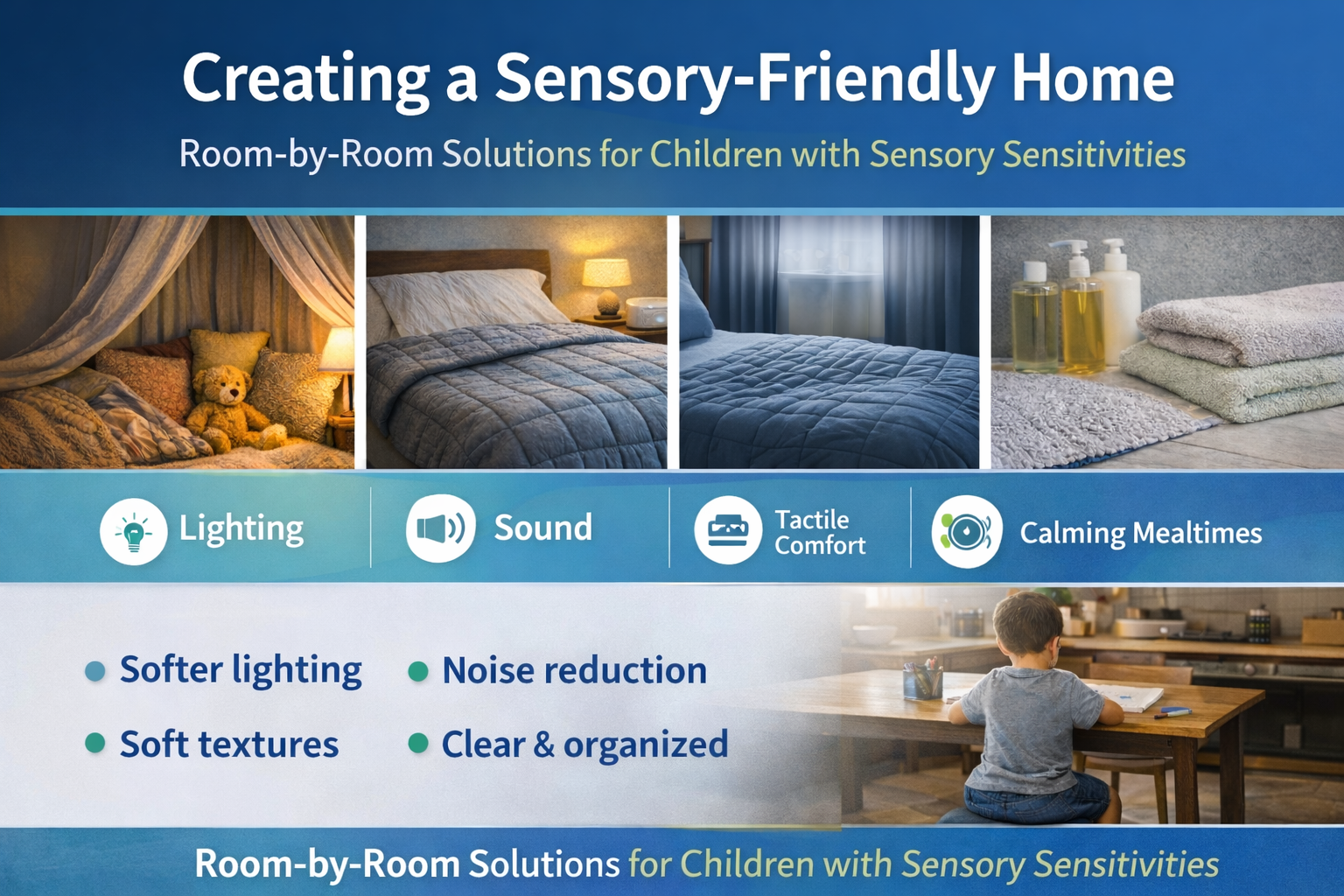
Our homes should be our sanctuary—a safe harbour from the often overwhelming sensory demands of the outside world. However, for a child with sensory sensitivities, the home itself can sometimes become a source of stress rather than comfort.
Everyday household “sensory offenders” such as the constant hum of a refrigerator, the flicker of a fluorescent tube light, the strong smell of cleaning products, or the scratchy texture of a sofa cover can silently contribute to a child’s sensory overload and dysregulation. Creating a sensory-friendly home is not about making your space sterile, restrictive, or boring. Instead, it is an act of intentional and thoughtful design. The core idea is simple:
consciously turn down the volume on sensory inputs that feel jarring, while turning up the volume on inputs that are calming, organizing, and regulating for the nervous system.
This checklist serves as a practical, room-by-room sensory audit, empowering you to become a true “sensory detective” within your own home.
The Room-by-Room Sensory Audit
The Living / Family Room (The Hub of the Home)
The living or family room is often the most active space in the house, making it a common source of sensory overload.
Lighting: Replace harsh overhead lighting with lamps that use warm-toned bulbs. Use curtains or blinds to soften intense sunlight and reduce glare
Sound: Use rugs (such as traditional Indian dhurries) and fabric curtains to absorb sound and minimize echo. Establish a family rule to limit constant background TV or device noise
Tactile Comfort & Organization: Offer a variety of textures through cushions and blankets. Create a cozy “cuddle corner” with soft pillows and a heavy quilt (razai). Use labeled bins or baskets for toys to reduce visual clutter and improve predictability
The Child’s Bedroom (The Sleep Sanctuary)
A child’s bedroom should signal calm, safety, and rest the moment they enter.
Visual Calm: Use soothing, muted paint colors. Install blackout curtains to create a dark, sleep-conducive environment
Auditory Peace: Use a white noise machine or a simple fan to mask sudden or startling noises
Tactile & Proprioceptive Support: Choose soft, breathable bedding such as cotton to avoid irritation
- Product Spotlight: Weighted Blanket: A weighted blanket can be a powerful sleep support tool. By providing gentle, evenly distributed deep pressure, it helps many children feel grounded, calm, and secure, promoting longer and more restful sleep for those who find deep pressure input organizing.
The Bathroom (A Potential Tactile Minefield)
Bathrooms can be challenging due to strong smells, slippery surfaces, and uncomfortable textures.
Tactile Sensitivity: Use extra-soft towels to reduce tactile discomfort. Choose mild or unscented soaps and shampoos to prevent sensory overload from strong fragrances
Safety & Vestibular Support: Place non-slip mats inside and outside the bath or shower to provide stable footing—especially important for children with vestibular sensitivities
The Kitchen & Dining Area (Calming Mealtimes)
Mealtimes can quickly become overwhelming without sensory-friendly adjustments.
Auditory Regulation: Place felt pads under dining chair legs to prevent loud scraping noises. Run noisy appliances like the mixer-grinder when the child is in another room
Visual Simplicity: Keep the dining table free of clutter during meals to help the child focus on eating.
Seating Support:
- Product Spotlight: Wobble Cushion For children who struggle to sit still during meals or homework, a wobble cushion offers gentle movement input while remaining seated. This subtle motion can support focus, body awareness, and longer engagement at the table.
Low-Cost Sensory Solutions: The Indian “Jugaad” Approach
Creating a sensory-friendly home does not have to be expensive. By embracing the Indian spirit of Jugaad—innovative, frugal problem-solving—you can use everyday household items to meet sensory needs effectively.
DIY Sensory Bins from the Kitchen:
Create rich tactile experiences using a simple tray (thali) filled with:
- Uncooked rice
- Different types of dal (lentils)
- Sabudana (tapioca pearls)
- Whole spices such as cloves and star anise
These materials offer engaging, multi-sensory exploration at zero extra cost.
Repurposed Textiles:
Old, soft cotton sarees or dupattas can be:
- Used as calming canopies over a bed
- Braided into “stretchy ropes” for pulling games that provide organizing deep pressure input
Aromatic “Smelling Jars”:
Create simple olfactory activities using small containers filled with familiar, calming scents from the Indian home and garden, such as:
- Cardamom pods (elaichi)
- Cloves (laung)
- Fresh jasmine flowers
Turning Your Home into a True Sensory Sanctuary: By thoughtfully auditing your home and embracing a creative, resourceful mindset, you can transform your living space into a true sanctuary. A sensory-friendly home supports your child’s regulation, emotional well-being, and independence—while creating a calmer, more harmonious environment for the entire family to thrive.

