


Source: UT News / Child Development (news.utexas.edu)
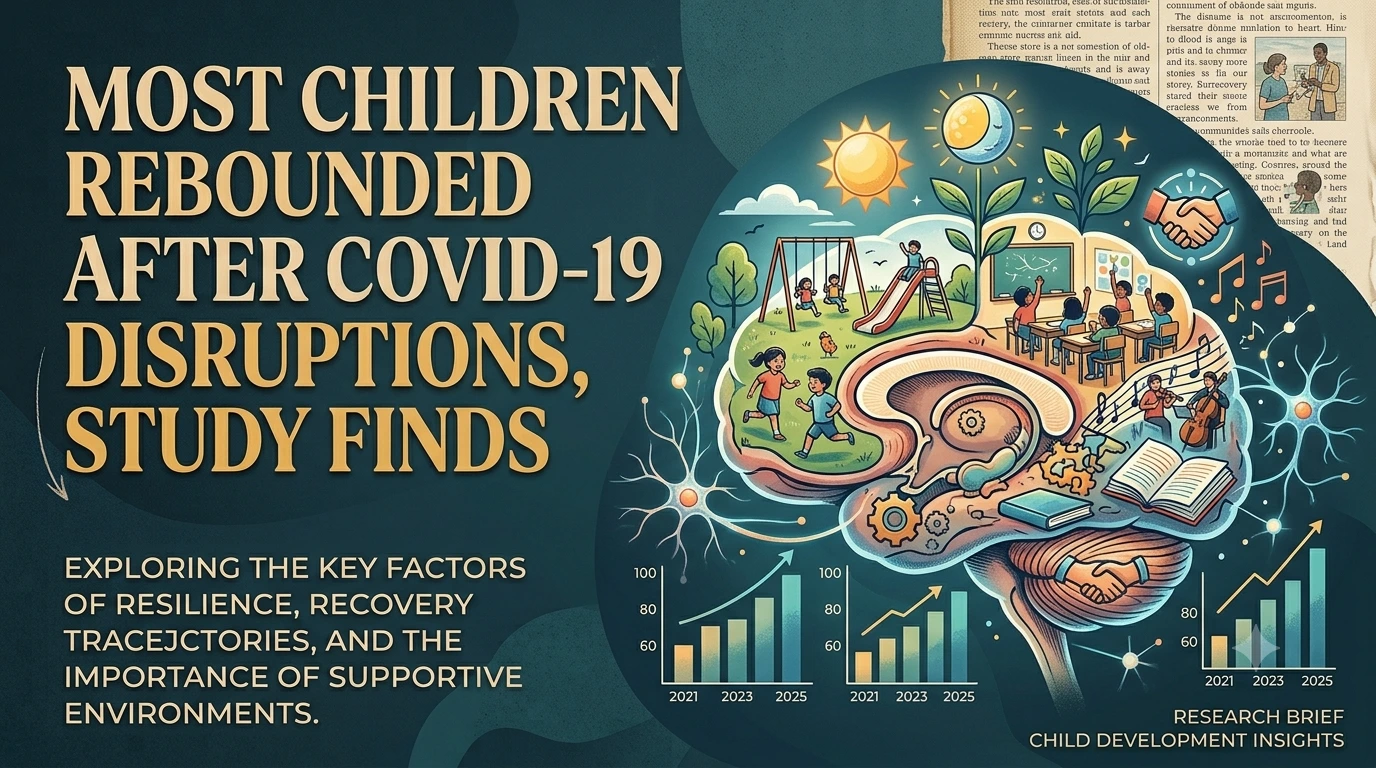
Six years after the pandemic disrupted daily life globally, long-term research following children before and after COVID-19 shows that developmental damage was far less widespread than early predictions suggested. Organized with help from The University of Texas at Austin, a collection of 17 studies from six countries-published in the journal Child Development-reveals that most children recovered significantly in their health, education, social growth, and overall well-being over time.
Initial research gathered during lockdowns warned of severe, lasting harm to children. However, tracking children across a longer timeframe offers a different outcome: while pandemic impacts were genuine and wide-ranging, many negative effects naturally faded over time. Where lasting setbacks occurred, they appeared mostly among children who were already experiencing challenges-such as economic hardship or limited resources-before the pandemic began.
“This means children’s resilience ensured the pandemic’s consequences were not universally catastrophic, and they weren’t uniform either, which is a cause for optimism,” stated Gabriela Livas, co-editor of the collection and professor at UT Austin. She noted that even vulnerable children handled the situation in various ways, shaped by many background factors beyond shutdown measures alone.
As part of the project, Livas studied low-income elementary students in Tulsa, Oklahoma, who participated in early childhood programs prior to the pandemic. Teacher reports indicated that most child behaviors stayed stable before and after pandemic disruptions. Researchers found no increases in aggression or attention problems, alongside only a small drop in prosocial behaviors like sharing, cooperating, and showing empathy.
Co-editor Anna D. Johnson of Georgetown University added that the findings challenge assumptions of universal “learning loss”. Instead, the evidence shows that COVID-19 interacted with existing social inequalities while highlighting children’s natural resilience.
The research series, titled “Children’s Developmental Trajectories in the Long Shadow of COVID-19,” was co-edited by Livas, Johnson, and Seth Pollak of the University of Wisconsin-Madison for the Society for Research in Child Development.
You can also read: How kids grow up

