


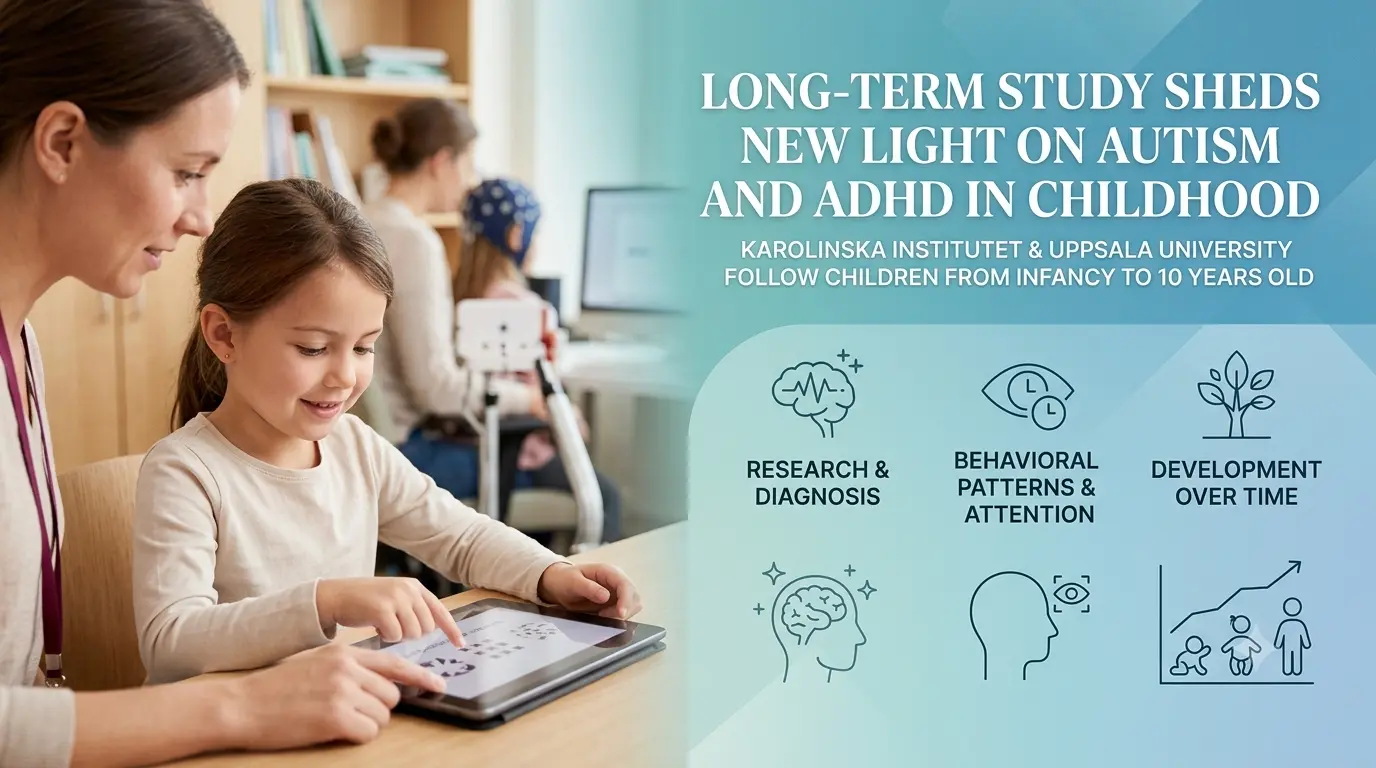
Scientists in Sweden are doing a long project to learn more about autism and ADHD. Thanks to a big donation, they can now watch children grow from when they are tiny babies all the way until they turn 10 years old.
This study is called EASE. The scientists look at babies who have a brother, sister, or parent with autism or ADHD. These babies are a little more likely to get the same diagnosis later on, but many of them grow up without it. By comparing different kids, scientists can see how brains develop in all kinds of ways.
To figure out how kids learn and think, scientists use cool tools:
- Eye-tracking and pupil measurements: Checking where babies look and how their eyes react to light.
- Brain scans (EEG and MRI): Watching brain pictures and signals.
- Gut studies: Checking if tummy health affects brain growth.
What Have Scientists Learned So Far?
Scientists found a few interesting clues about how babies with autism see and hear the world:
- Looking Together: 10-month-old babies who get an autism diagnosis later can follow where an adult looks. However, they are less likely to point or start looking at things with someone else. This shows they might just be less interested in sharing attention, rather than having trouble seeing what others are doing.
- Spotting Details: At three years old, children with autism are super fast at spotting tiny details in big, messy pictures.
- Extra Sensitive: As babies, their eyes react more strongly to quick light changes, and their ears react more to everyday noises. This shows their brains process sights and sounds differently right from the start.
What Comes Next?
Now that scientists have funding to keep going until the kids are 10, they want to answer bigger questions:
- Do diagnoses change? They want to see if early signs stay the same or if some kids develop symptoms later on.
- Using Smart Tech: They are trying to build computer tools that can look at a 3-year-old’s test results and guess how they will do by age 10.
By following these kids over many years, scientists hope to learn how to help all kinds of minds thrive as they grow up.
Source: Long-term ADHD

