
Mealtime: A Texture Ladder for Picky Eating That Isn’t a Fight

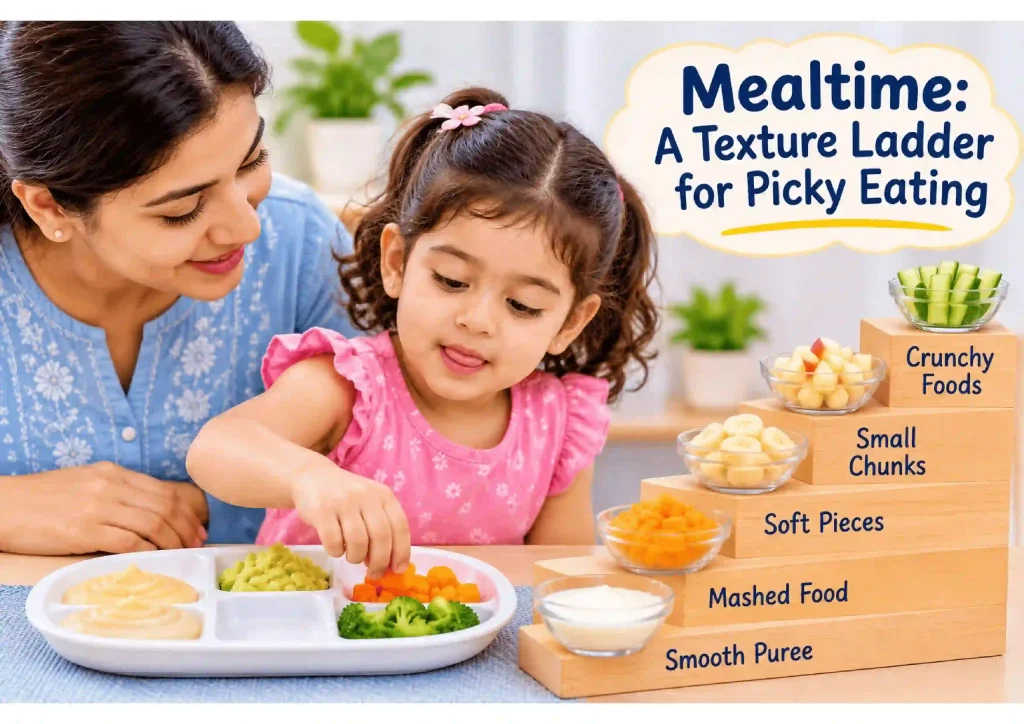
For some children, trying new foods can feel overwhelming, especially when the texture, smell, temperature, or appearance is unfamiliar. A child may prefer smooth foods, avoid mixed textures, or feel uncomfortable with foods that are crunchy, sticky, lumpy, or chewy. These responses are not always simply about being picky,they may reflect sensory sensitivities or difficulties with accepting unfamiliar foods. The goal is not to make children eat everything immediately, but to help them feel safe, comfortable, and gradually more confident around food.
Practical Strategies for Parents
1. Introduce a Texture Ladder
Start with a texture the child already accepts and make small, manageable changes. For example, if a child enjoys smooth potato puree, gradually introduce slightly thicker mashed potatoes, followed by soft, small pieces of boiled potato, and then regular soft potato pieces as the child becomes comfortable. Adapt the steps to the child’s skills and comfort.
2. Encourage Exploration Without Pressure
Allow children to look at, touch, smell, or move food on their plate before expecting them to taste it. Exploring food is a valuable step towards acceptance. Avoid forcing bites, bargaining, or using food as a reward.
3. Use Familiar Foods as a Bridge
Pair a familiar, accepted food with a similar new food. If a child enjoys a particular brand or shape of cracker, introduce a similar cracker with a slightly different texture. Change one feature at a time to make the experience more predictable.
4. Make Mealtimes Predictable
Maintain regular meal and snack times, offer a comfortable seating arrangement, and keep distractions low. Include at least one familiar food alongside the food being introduced so the child has something they feel comfortable eating.
5. Model Positive Food Exploration
Parents can demonstrate touching, smelling, tasting, and describing foods in a relaxed way. Simple comments such as “This banana feels soft” or “This cucumber makes a crunchy sound” help children notice food properties without feeling pressured to eat.
6. Celebrate Small Steps
Progress may begin with tolerating a food on the table, allowing it on the plate, touching it, smelling it, or taking a tiny taste. Acknowledge these steps warmly without making the child feel watched or evaluated.
7. Repeat Exposure patiently
Children may need many calm opportunities to become familiar with a new food. Offer it again on different days, without insisting that the child eat it. If the child refuses, remain neutral and try another time.
A Simple Texture Ladder
A child who accepts smooth foods might progress through the following steps, depending on their individual feeding skills:
- Smooth puree.
- Slightly thicker puree.
- Soft, mashed food with small lumps.
- Soft, easily manageable pieces.
- More textured foods that require additional chewing.
This sequence should be adapted to the child rather than followed as a fixed timetable. Children who have difficulty chewing or swallowing need an appropriate feeding assessment before progressing to more challenging textures.

8. Use Favourite Toys and Pretend Play:
Use the child’s favourite toy or character to encourage food exploration in a fun, pressure-free way. For example, if the child loves a rabbit, the parent can use a rabbit toy and say, “Look! Bunny is eating a crunchy carrot. Would you like to explore a carrot too?” The parent can demonstrate eating a carrot while the toy pretends to eat. This may encourage the child to look at, touch, smell, or try the food when they feel ready. Never force the child to eat; praise their willingness to explore.
Practical example:
Child’s favourite toy: Rabbit
Food: Carrot
Activity: Let the rabbit toy pretend to eat a carrot and describe it as “crunchy” and “orange.”
Goal: Encourage the child to become familiar with the carrot through play, without pressure to take a bite.
When to Seek Professional Support
If a child has a very restricted diet, frequently gags or coughs during meals, struggles to chew, appears distressed around food, or has concerns about growth or nutrition, parents should consult their pediatrician and an appropriately qualified feeding professional.
Final Message for Parents
Mealtimes should be opportunities for connection, not conflict. When parents offer predictable routines, familiar foods, gradual texture changes, and pressure-free exploration, children can develop greater confidence around new foods. The aim is progress at the child’s pace, with safety, comfort, and a positive relationship with food at the centre of every meal.