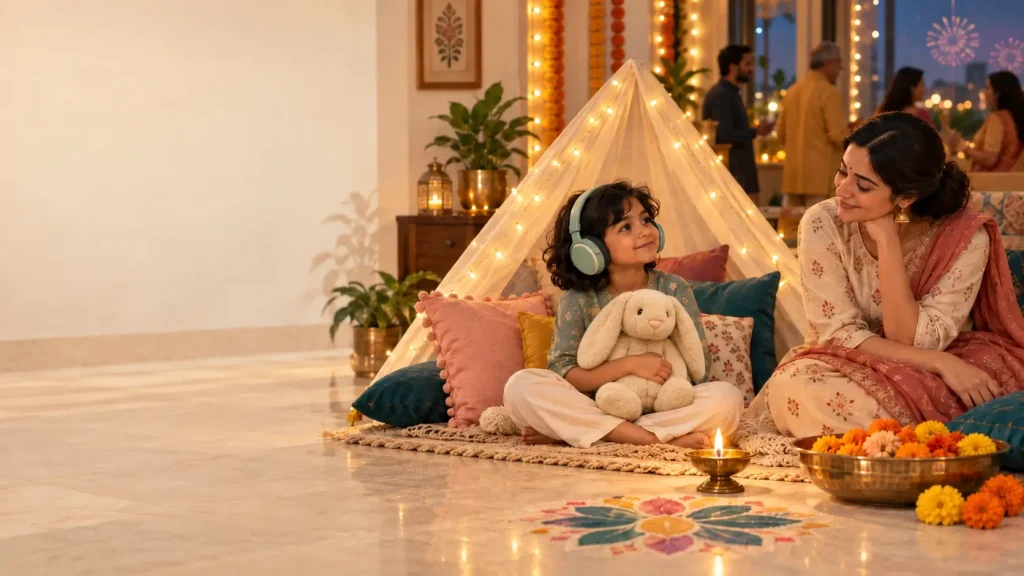
For neurodivergent children, including those with autism, ADHD or sensory sensitivities, Diwali can mean too much noise, light, people and change, all at once. A meltdown isn’t bad behaviour. It’s a child saying, “This is too much for me.”
Here are 5 simple things that help.
1. Prepare, don’t surprise
A week before, talk through what Diwali will look like: guests, diyas, crackers, sweets. Watch short cracker videos together so the sounds feel familiar. On the day, say: “Crackers will be loud. If it feels too much, we can go inside.” Keep headphones or ear defenders ready, and let your child choose when to wear them.
2. Set up a quiet corner
Pick one room as your child’s safe space before guests arrive. Dim lights, soft cushions, a favourite toy or comfort item. Tell them they can go there anytime, no questions asked. Knowing the exit exists often means they won’t need it.
3. Don’t force relatives
Skip the forced hugs, pranaam, or “beta, poem sunao” performances. Offer choices instead: “Wave karoge ya hello bologe?” Give relatives a heads-up too: “He may keep a distance, and that’s okay.”
4. Keep food and routine predictable
Tired, hungry kids melt down faster. Keep regular meals and sleep timings as close to normal as possible. Decide beforehand how much mithai, and when. Carry a few familiar snacks, since festive foods can taste and smell unfamiliar.
5. Catch the meltdown early
Meltdowns rarely come out of nowhere. Watch for early signs: covering ears, pacing, irritability, crying, or trying to escape. Don’t wait for the storm. Step away, reduce noise and light, and give your child time to settle. No lectures, no punishment.
Remember
This Diwali, don’t aim for a perfectly behaved child. Aim for a child who feels safe, understood and included.
For Our Neurodivergent Children
To every child who covers their ears, needs a quiet corner, or celebrates in their own way: you are not too much. Your way of enjoying Diwali is just as beautiful. You don’t have to be loud, hug everyone or sit through every puja to belong. Your smile over a single diya is enough to light up the whole house.
May your Diwali be gentle, bright and full of joy.